Little note
High contrast baby flashcards: when and how to use them
High contrast baby flashcards are one of the simplest early toys: bold black-and-white images on sturdy cards. Here is when to start, how to show them and how to move from black and white to colour as your baby's vision develops.
In this note
- Why black and white?
- When to start high contrast cards
- How to show the cards
- Tummy time ideas
- Cards, books or both?
- Choosing a set that grows with baby
- What the research says, in plain words
- Common questions from parents
Why black and white?
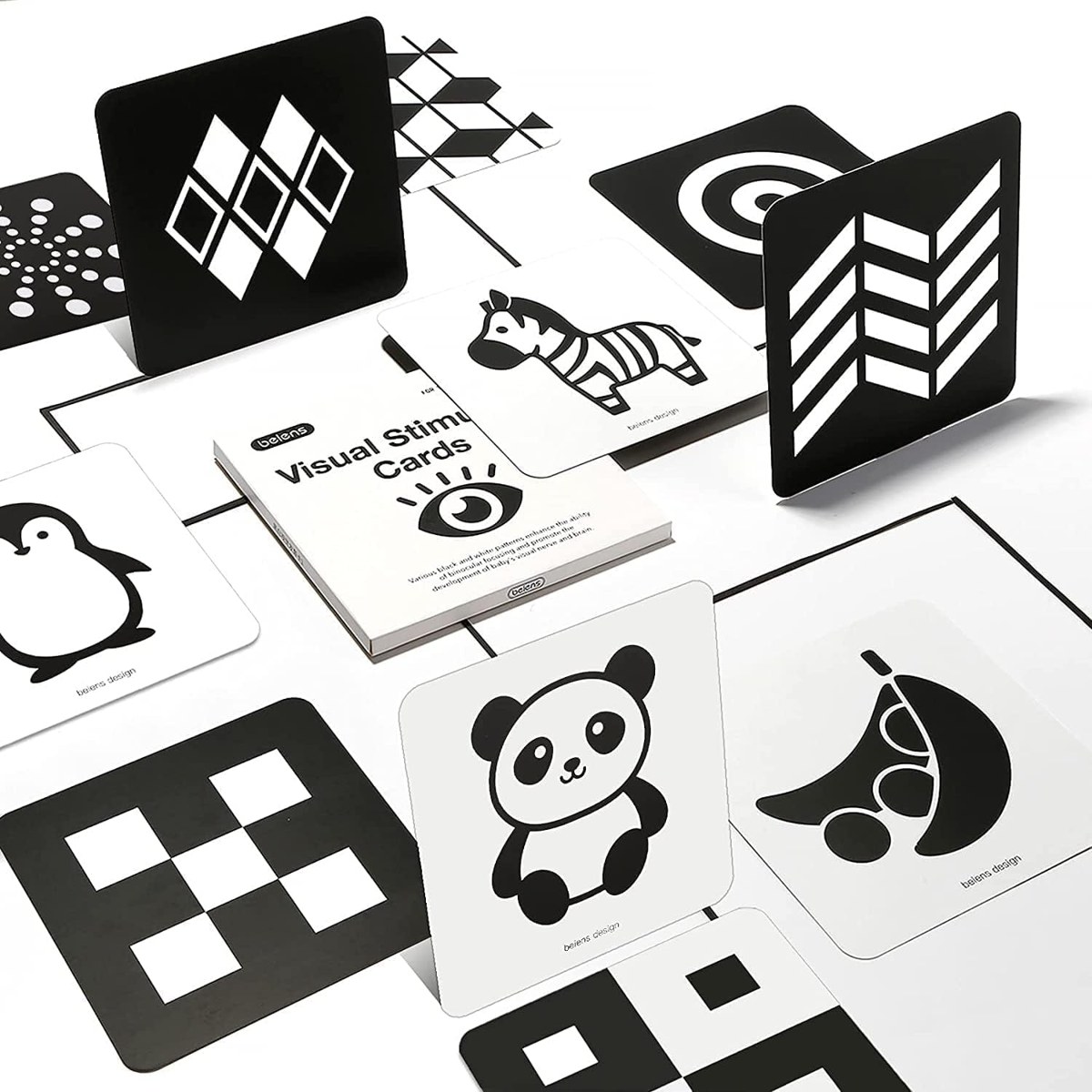
A newborn's vision is still developing. In the first weeks babies see the world in soft focus and are drawn to strong contrast: dark next to light, bold edges, simple faces. Black white patterns, stripes, checks and circles are easier for young eyes to find than pastel colours, which is why high-contrast flashcards are designed around them.
Looking at these bold images gives babies something to focus on during calm, alert moments. Parents often notice their newborn staring at a card, then following it as it moves — early visual tracking that babies practise naturally.
When to start high contrast cards
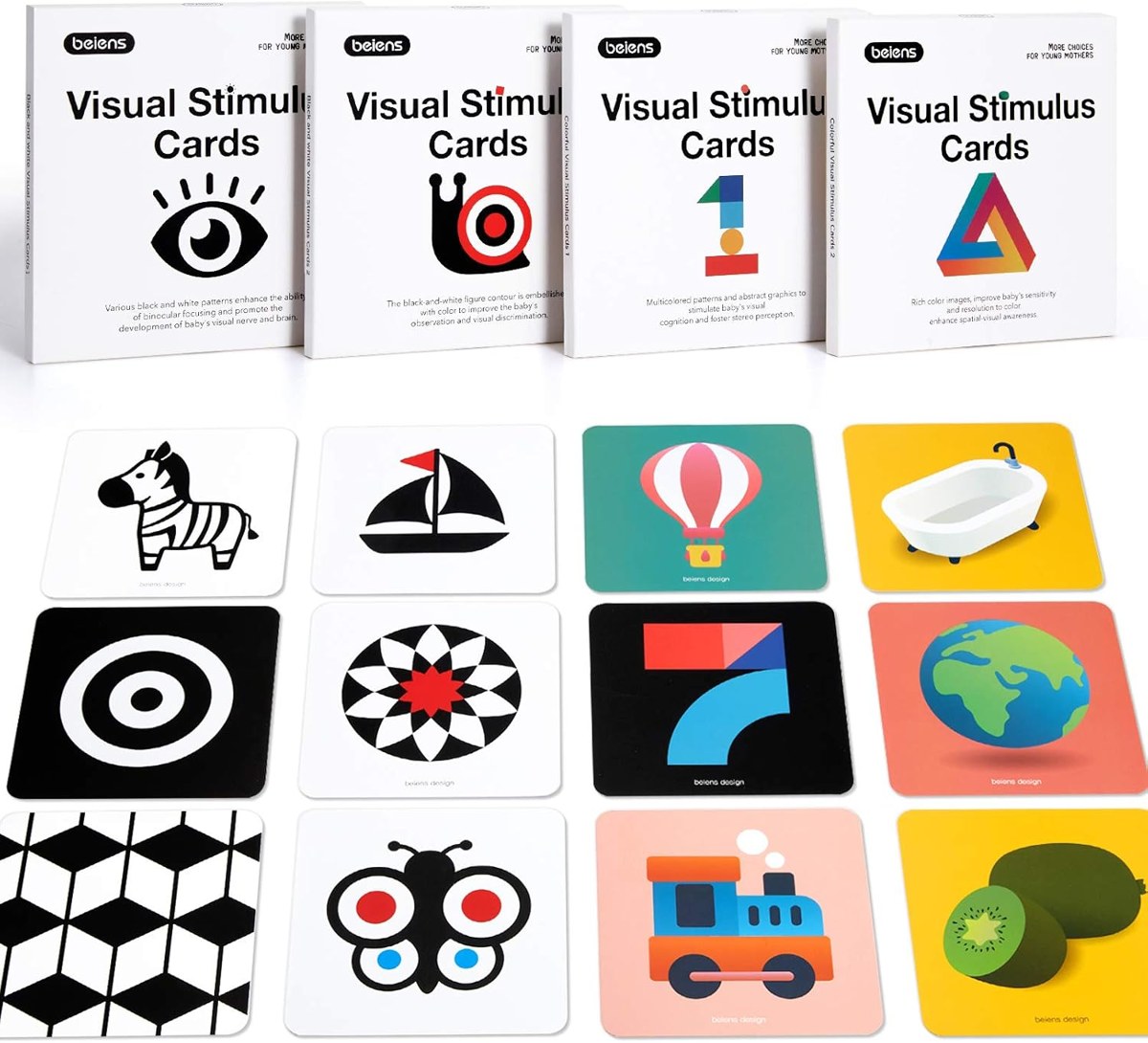
You can start in the first weeks, whenever baby is awake, fed and calm. Most families use black-and-white cards most in the first three months, add cards with red from around two to three months, and move to full colour from about four to six months. There is no rush; follow your baby's interest.
- 0–3 months: black and white, simple shapes and faces.
- 2–6 months: black, white and red, more detail.
- 6–12 months: colourful images, everyday objects.
- 12–36 months: pictures to name as first words arrive.
How to show the cards
Hold one card about 20 to 30 cm from baby's face, the distance at which newborns focus best. Wait a few seconds, then move the card slowly to one side and back. When baby's gaze wanders or they turn away, they have had enough of that card; swap to the next or take a break.
Talk while you show the cards. Naming the shapes — circle, stripes, panda — adds face-to-face interaction, which is as important as the image itself. Your face is the most interesting high-contrast pattern of all to a baby.
Tummy time ideas
- Stand two or three cards in a semicircle in front of baby on the play mat.
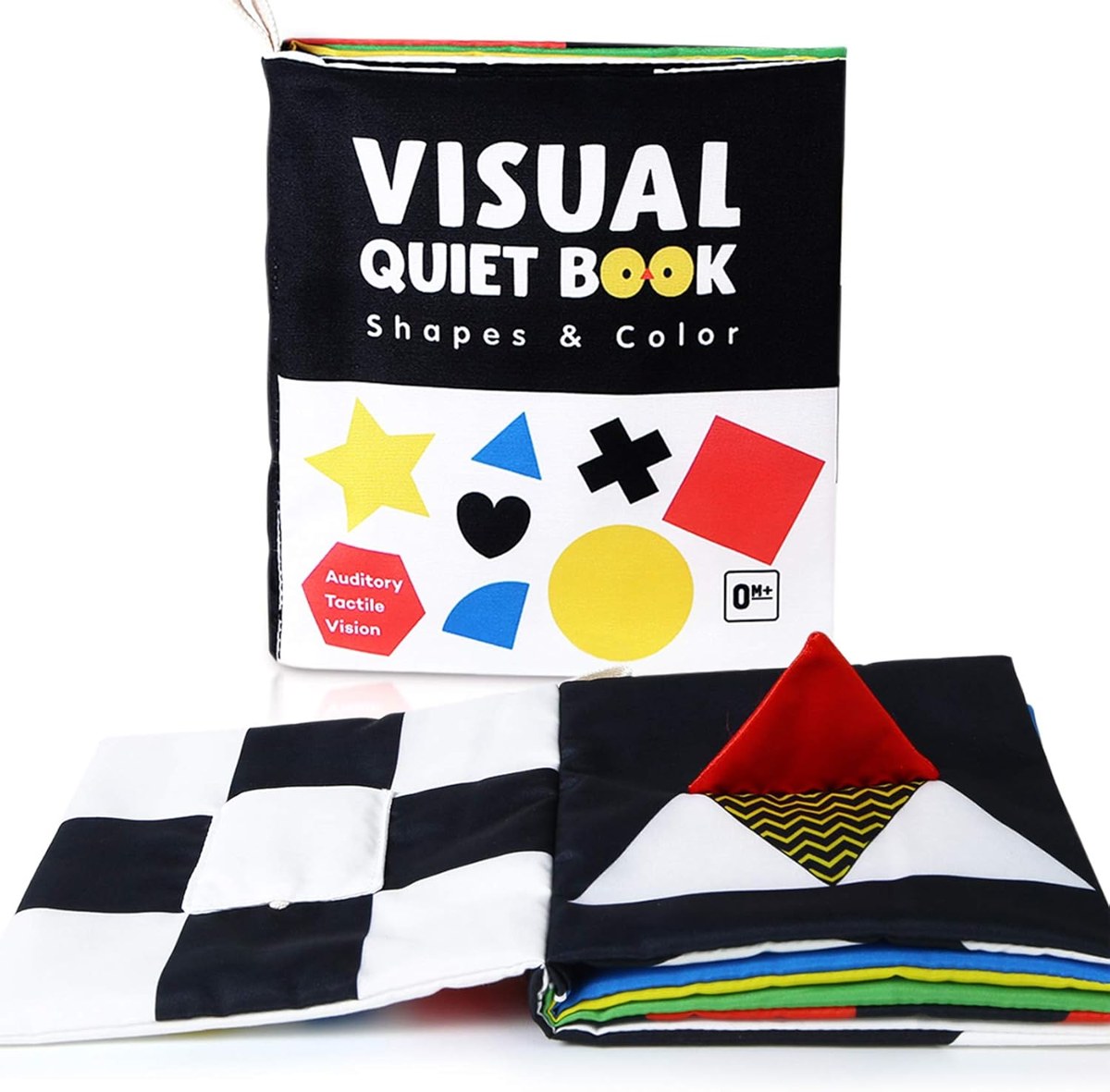
- Prop a high contrast book open at eye level.
- Change the cards every few days so there is always something new to look at.
- Lie down at baby's level and show a card between you.
Short, frequent tummy time sessions with something interesting to look at are easier for babies than one long session.
Cards, books or both?
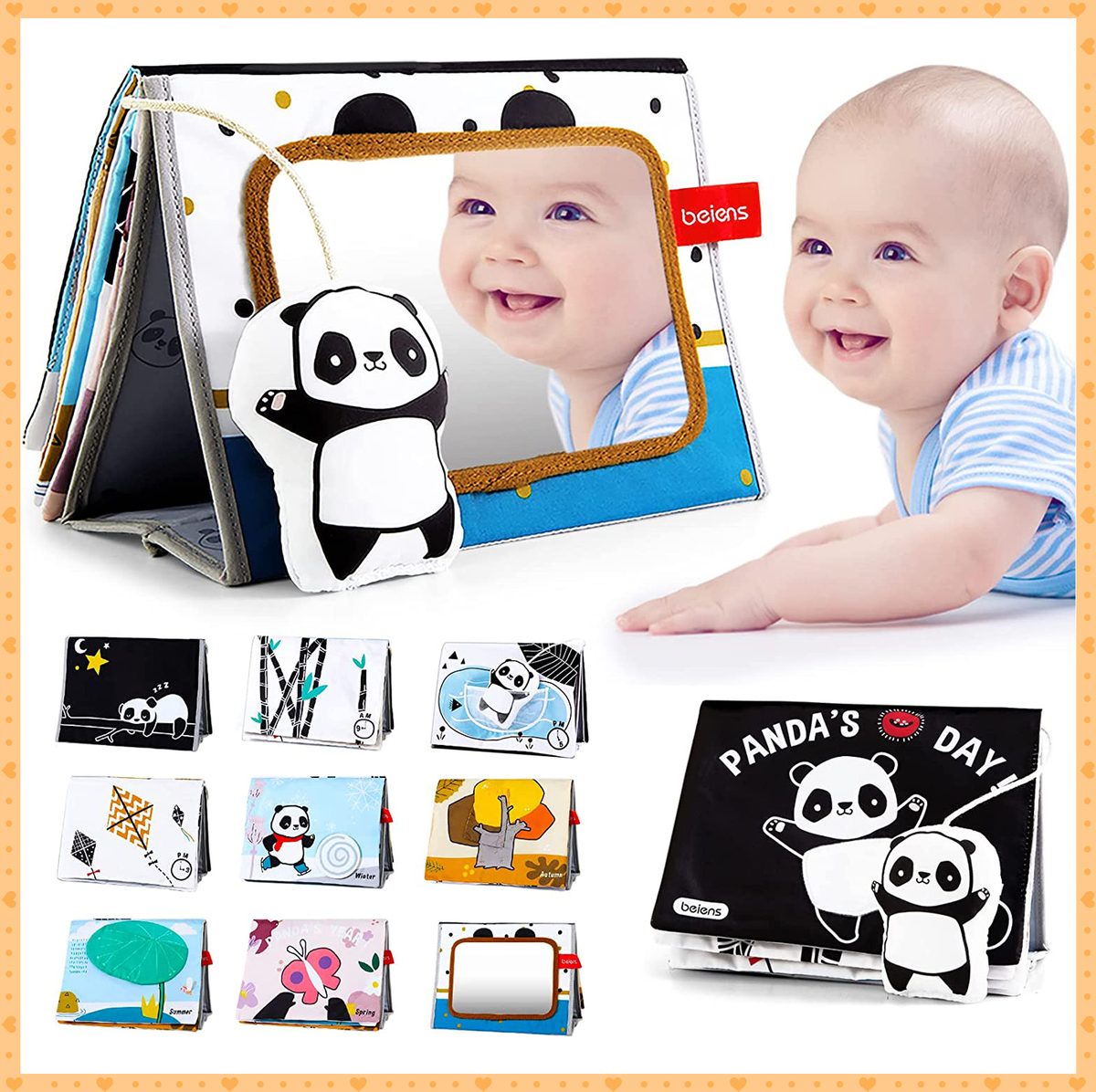
Flashcards are flexible: you can hold them, prop them up or tape them beside the changing table. Soft high contrast books add crinkle sounds and textures for babies to grab once they start reaching, from around three months. Many families use both — cards for the earliest weeks, a cloth book for the stroller and the crib.
Choosing a set that grows with baby
The beiens 20-card set covers the first months with 40 bold black-and-white images, with a second set that adds red. The 80-card set comes in four packs for different stages, from simple patterns for newborns to colourful pictures for toddlers who are learning words. Thick cards stand up on their own and handle a lot of handling and the occasional chew.
Whatever set you choose, the best early learning tool is still you: a few minutes of looking, talking and smiling together, several times a day.
What the research says, in plain words
Studies of infant vision show that newborns have limited colour vision and respond most to strong light-dark contrast, and that visual development moves quickly through the first months. High contrast images do not make a baby smarter on their own, but they do give a young infant something they can actually see, which makes it easier to encourage attention, focus and shared play. Think of the cards as a way to support early sensory play and to spend calm, engaged time together, especially in the weeks before baby can reach and grab.
- They stimulate interest: bold patterns catch an infant's eye.
- They support early skills: focusing, following and turning the head.
- They encourage interaction: talking and smiling while you show them.
Common questions from parents
Are high contrast cards good for babies? They give newborns something easy to see and are a gentle way to share alert time. When to start? From the first weeks. What are the benefits? Practice with focusing and tracking, and plenty of face-to-face interaction. How long? A few minutes at a time, following your baby's cues.